
A ROOM THAT WORKS FOR YOU
Heavy Furniture on a Floating Floor: What to Check
A floating floor is not fastened to the substrate in the same way as a bonded installation. Heavy furniture raises questions about weight, contact points and required movement. Avoid a universal weight limit: the answer must come from the selected flooring and the actual object.
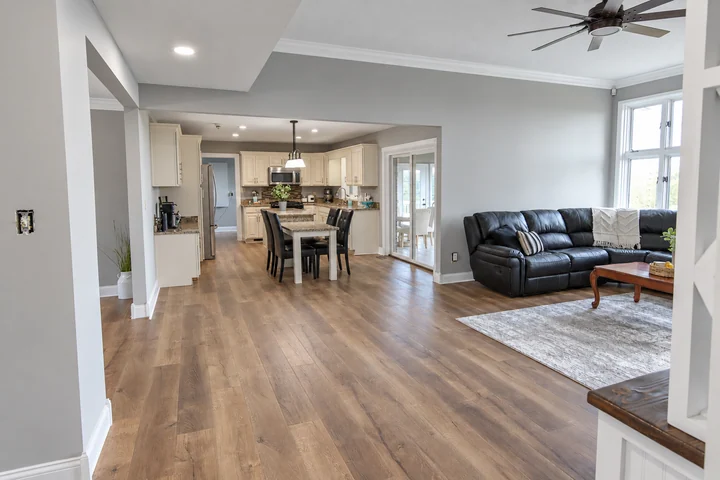
Make a list before selecting the floor
Identify large bookcases, loaded storage cabinets, aquariums, safes and other substantial furnishings. Record approximate loaded weight from reliable product information, the footprint and the type of feet or base. Distinguish movable furniture from anything anchored or built in. A cabinet that looks freestanding in a photograph may function as a fixed obstruction after installation.
Ask for the product-specific answer
Give the list to the installer and flooring manufacturer. Ask whether the product permits the intended arrangement and what precautions are required. Do not infer approval from a general residential-use label. If a particular object is incompatible with the proposed system, compare another approved flooring method or a revised layout before buying cartons and accessories.
Coordinate moving and final placement
Agree who moves the object and when the floor is ready for it. Review the path, thresholds and turning space, not just the final location. Use only protection and support arrangements suitable for the floor and object. Photograph the final feet or base so the care record explains what was installed. If the furniture changes later, repeat the suitability check rather than relying on the original room approval.
Before you decide
Will adding a soft pad solve every heavy-load concern?
No. A pad may protect a finish but does not establish structural capacity or permission to restrain a floating floor. Obtain guidance for the complete arrangement.