A ROOM THAT WORKS FOR YOU
Open Kitchen Shelves or Upper Cabinets?
Open shelving can make everyday dishes easy to see, but it also puts their storage and upkeep on display. Compare it with enclosed cabinets using the objects you actually own and the tasks that happen below.
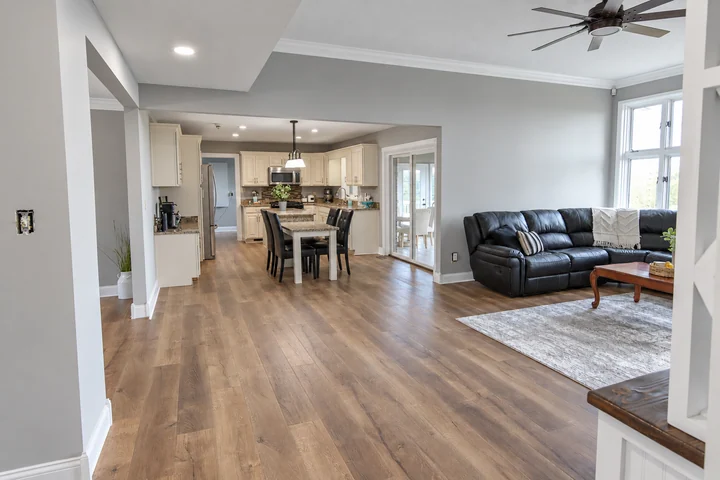
Decide what deserves the visible space
Lay out the dishes, glasses or serving pieces you would place on the shelves. Measure their depth and stacked height and consider how often they are used. A styled photograph may show only a few matching items; your kitchen may need space for mixed containers and backups. Identify where those less decorative items will go before removing enclosed storage.
Consider the location's cleaning demands
Review what happens nearby, especially cooking and food preparation. Open shelves and their contents need accessible cleaning surfaces. Check whether you can reach the back and safely remove the heaviest item without leaning across a busy counter. A shelf that is attractive but difficult to maintain may not be the best location for frequently handled dishes.
Coordinate support, finishes and lighting early
Give the installer the proposed shelf material, depth and intended contents so support can be reviewed. Decide how the backsplash terminates around brackets and whether lighting is included. Exposed supports and wall attachments are part of the finished design. Keep them in the scope rather than assuming shelves are a simple substitute that can be added after all other work is complete.
Before you decide
Will open shelves provide the same storage as the cabinets they replace?
Not necessarily. Compare usable dimensions and the amount of visible storage you are willing to keep organized. Inventory the cabinet contents first. A mixed plan with selected open shelves and retained enclosed storage may better match the household than replacing every upper cabinet.